
2 hr
Field of Light Sunrise Experience at Uluru
Watch dawn break over Uluru while wandering among 50,000 illuminated glass spheres in the desert
Reserve
Hand-picked by our editors — only the best 5 experiences from 140 reviewed.
Verified partners for every tour, free cancellation where available, and instant confirmation on every booking.
2 hr
Watch dawn break over Uluru while wandering among 50,000 illuminated glass spheres in the desert
Reserve
5 hr
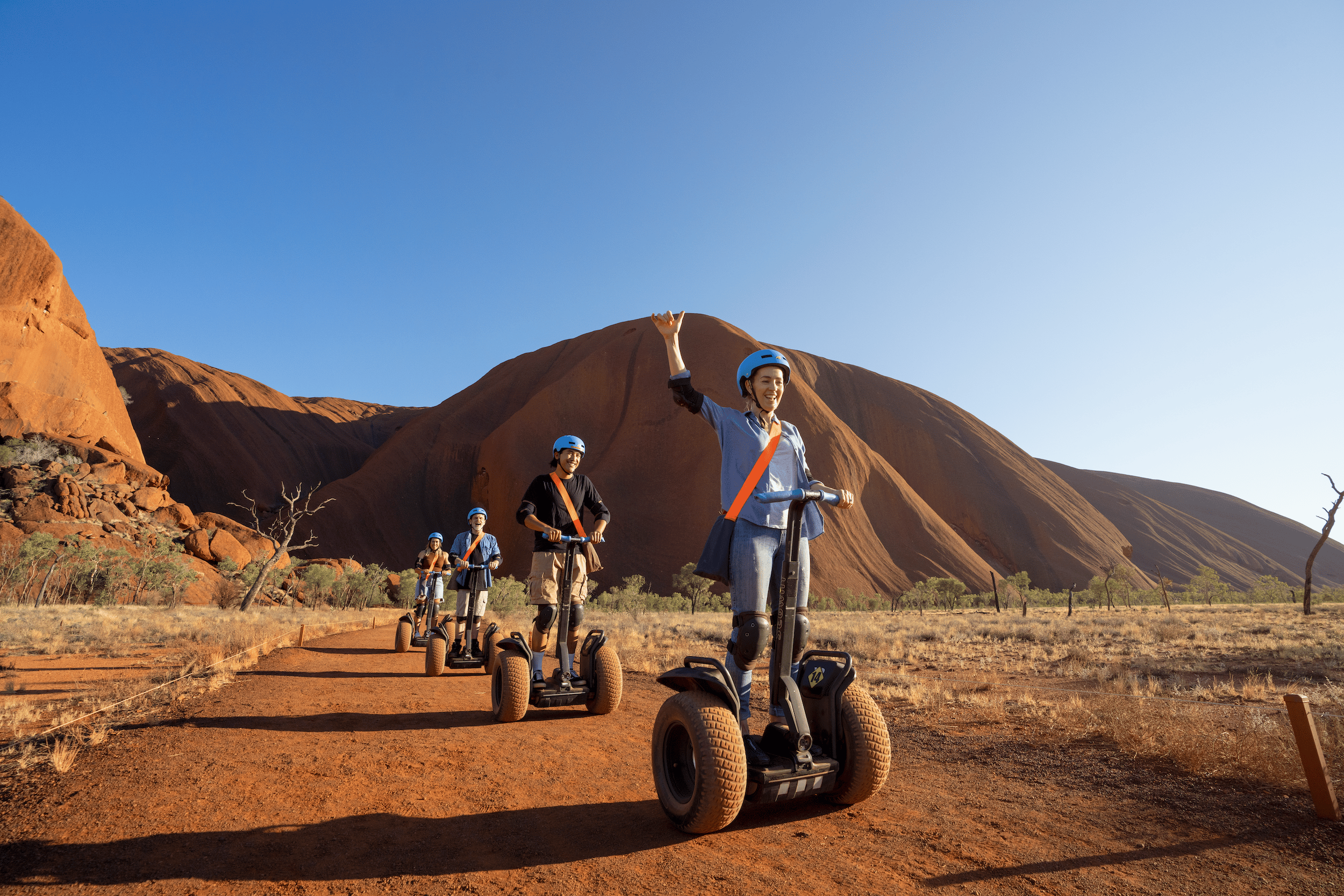
Glide around the entire base of Uluru on a Segway and explore the hidden Mutitjulu Waterhole at sunrise.
Reserve
5 hr 30 min
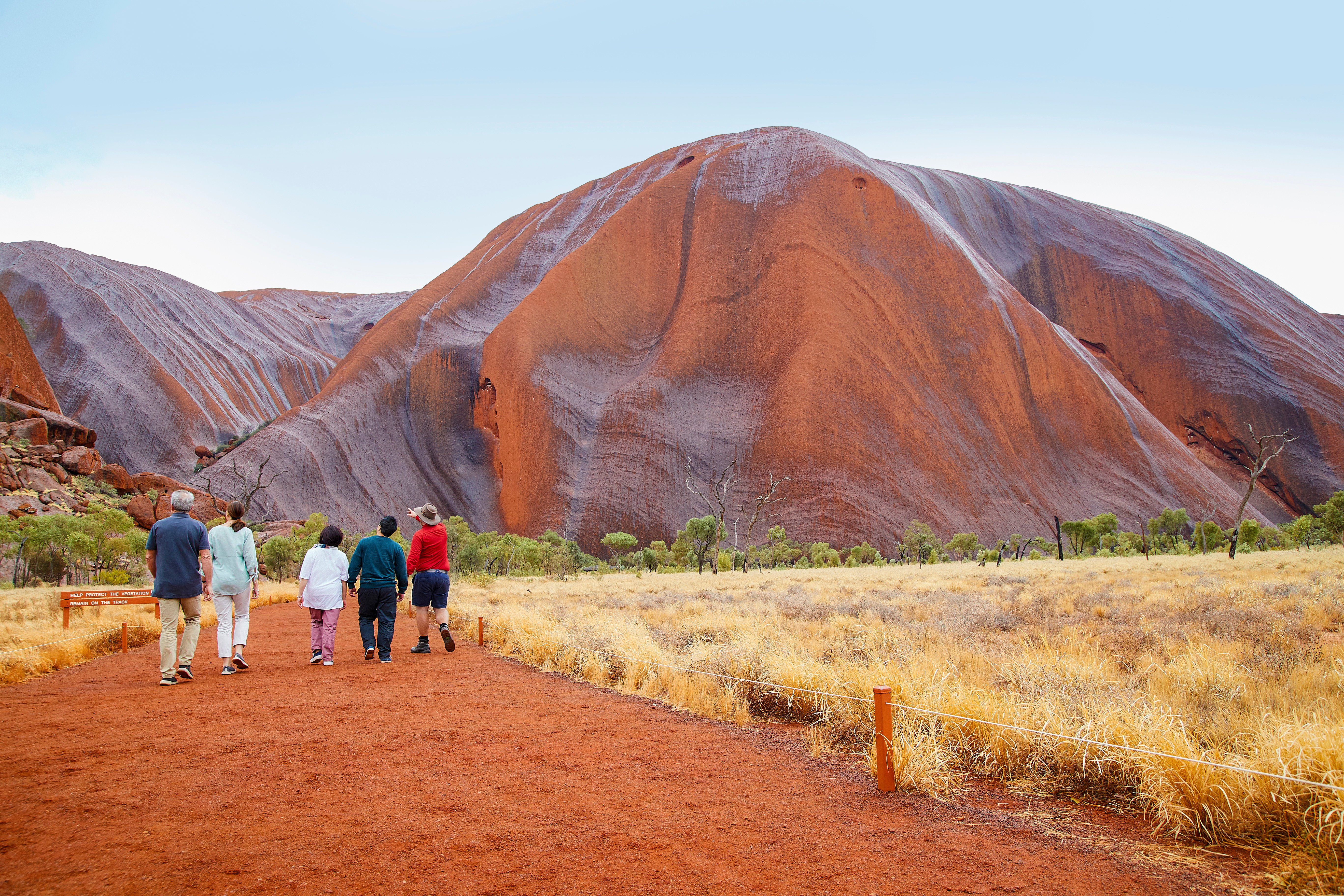
Circle the sacred monolith at dawn, learn ancestral stories, and witness the desert come alive.
ReservePrices from verified partners. Availability updates in real time at checkout. Free cancellation policies apply where shown.
The landmarks, rooms, and views travelers on this tour remember — all visible on a single visit.
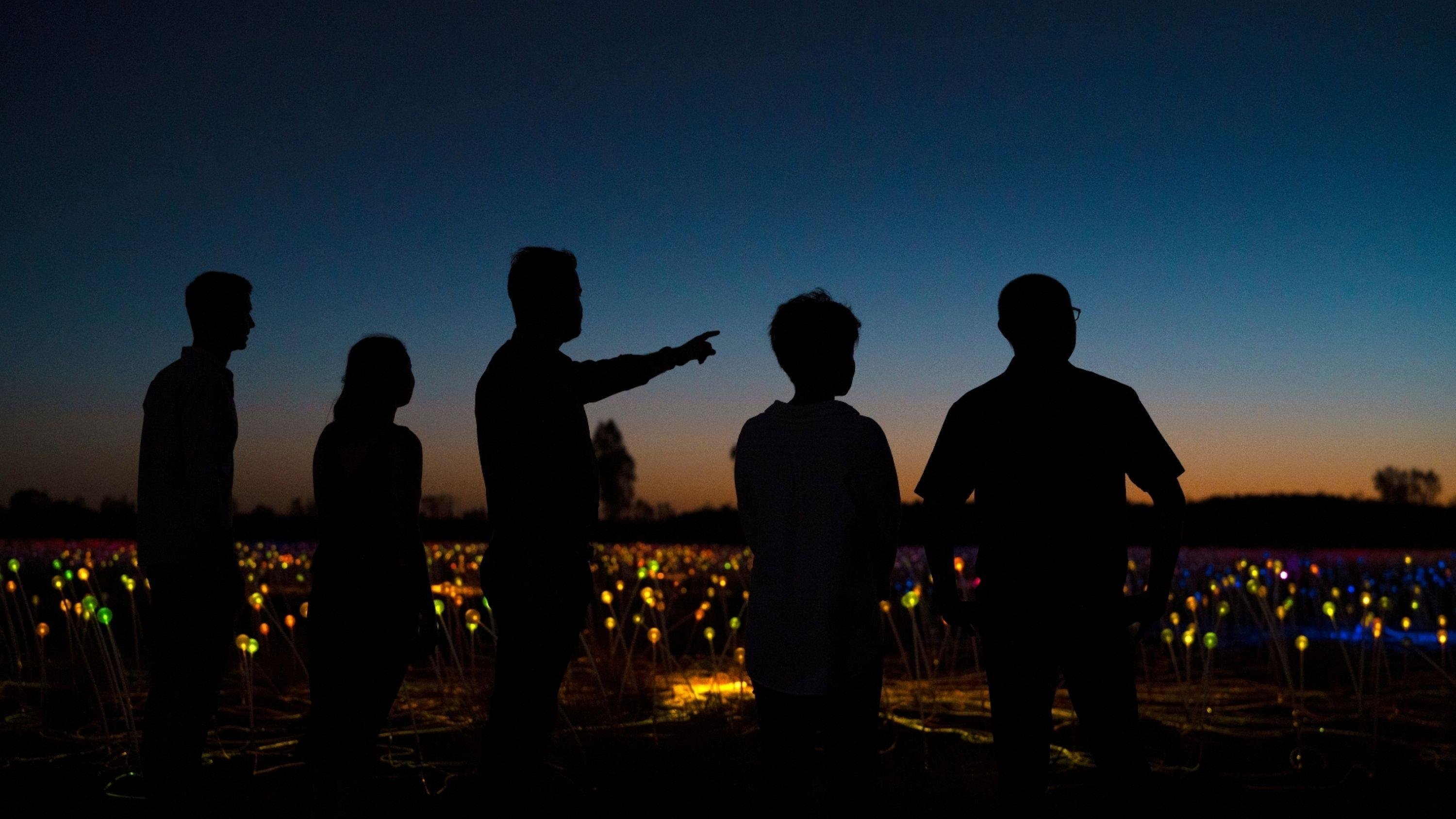
Thousands of glass spheres light up the desert floor at dawn.
These experiences offer distinct sensory perspectives; most travelers find the dawn illumination more meditative, while the evening cultural walks provide deeper engagement with local heritage.
| Feature | Top pick Field of Light | Sunset Cultural Tour |
|---|---|---|
Experience Focus |
Artistic light installation | Indigenous tradition and history |
Timing |
Pre-dawn hours | Late afternoon to dusk |
Lighting Conditions |
Fiber-optic illumination | Natural golden hour transition |
Crowd Levels |
Moderate to high | High during peak season |
Primary Activity |
Walking through illuminated pathways | Guided educational storytelling |
| See tickets → |
Verdict: Securing uluru sunrise & field of light tour tickets provides a rare visual art display, whereas the cultural alternative is ideal for those prioritizing traditional narratives over uluru sunrise & field of light tour tours, though many visitors eventually book both uluru sunrise & field of light tour tour variations.
Choose your ticket, select your date, and reserve in under two minutes. Secure checkout handled by our verified partner.
Instant confirmation by email, with a mobile voucher you can save offline. No printing, no queuing at a collection desk.
Arrive at the entrance, show your voucher on your phone, and walk in. Most tickets include priority or skip-the-line access.
Practical details for your visit straight from our verified partners — hours, access, rules, and how to get there.
Yulara, NT
Check lobby 15 minutes prior
Follow Lasseter Highway signs from Yulara.
Provided by most booked tour operators.
Wear sturdy, enclosed walking shoes suitable for sandy and rocky desert terrain. Dress in layers, as early mornings are cold while midday desert heat intensifies quickly.
Carry only lightweight daypacks. All personal belongings must be kept with you, as there are no secure storage facilities at the installation sites.
Photography is permitted for personal use, but commercial drones are strictly prohibited within the national park. Ensure memory cards have ample space for night-time and sunrise captures.
The terrain features soft sand and uneven ground, which may be challenging for standard wheelchairs. Guided walking tours may provide designated pathways where available.
Mobile reception is limited in remote sections of the park. Download maps and information before departing for your uluru sunrise & field of light tour.
Children under 18 years must be supervised at all times due to the vast desert environment. The uluru sunrise & field of light tour can involve significant walking, so ensure children are prepared.
Bring a minimum of 2 liters of water per person as dehydration is a risk in the arid climate. Pack light snacks, but ensure all waste is packed out to preserve the pristine desert environment.
Domestic animals are not permitted inside Uluru-Kata Tjuta National Park to protect local wildlife. Service animals may be allowed with prior park authority approval.
The uluru sunrise & field of light tour operates in an outdoor environment subject to weather conditions. Always check park alerts before leaving your accommodation.
Best time to go, insider tips, nearby landmarks, and the cancellation fine print — flip through to skim what matters to you.
How crowds, weather, and events shift across the year.
Clear skies and cool mornings, though overnight temperatures drop to near freezing.
Mild temperatures before the extreme summer heat begins in December.
High temperatures often exceed 40C, requiring early morning completion.
Ideal weather for walking tours with consistent, comfortable desert conditions.
Small details that turn a good visit into a great one.
Drink water before you feel thirsty to combat desert dryness.
Morning temperatures change drastically within two hours of sunrise.
Sand in the dunes can be very fine, so gaiters or closed shoes are recommended.
Do not climb the sacred rock formations as requested by the traditional owners.
Aim to be at the site between 05:00 and 06:30 for the best light.
Non-bookable sights within a short walk — free to visit, easy to pair.
A peaceful site with cultural significance and rock art.
Learn about Anangu history and park governance.
Large rock formations located further west in the park.
Flexible, no hidden fees.
Full refunds are typically provided for cancellations made at least 24 hours in advance. Park entry fees of 38 AUD are non-refundable through tour operators.
Hand-picked options within walking distance — pick a district for vibe, or a specific hotel for convenience.
Central location in Yulara resort area.
High-end resort with comprehensive amenities.
Value accommodation for park visitors.
Bruce Munro sketched the idea for Field of Light in 1992, sitting in the Red Centre with a notebook; the installation did not appear on the ground at Uluru until 2016. It has been extended repeatedly since. What began as a temporary artwork of 50,000 solar-powered stems now stands as one of the most visited contemporary installations in Australia, spread across an area roughly the size of seven football fields on a plain called Tili Wiru Tjuta Nyakutjaku — 'looking at lots of beautiful lights' in Pitjantjatjara. The rock itself is older by an order of magnitude no artwork can approach. Uluru is arkosic sandstone, laid down some 550 million years ago in an alluvial fan, then tilted almost vertically by tectonic folding. It rises 348 metres above the surrounding plain. Most of its mass lies underground. The iron in the stone oxidises at the surface, which is why the monolith reddens at dawn and cools to grey-brown under cloud. A uluru sunrise & field of light tour is timed to that chemistry: the colour shift lasts minutes, not hours. The land is Aṉangu country, returned to its traditional owners in 1985 and leased back to the Commonwealth. Uluru-Kata Tjuta National Park holds dual UNESCO World Heritage listing, for natural values and for cultural landscape — a rare combination. Climbing closed permanently in October 2019 at the request of Aṉangu, who had asked for decades. The park's interpretive framework is now built around Tjukurpa, the body of law and creation narrative that binds people, land and ceremony. Waterholes such as Mutitjulu, sacred sites at the base, and the thirty-six domes of Kata Tjuta thirty-five kilometres west are read through it. That reframing changed what visitors come for. Attention has moved from ascent to observation — from summit to horizon. Dawn viewing platforms at Talinguru Nyakunytjaku, opened in 2009, were designed with Aṉangu consultation to hold crowds without disturbing sacred ground. Field of Light sits nearby, switched on at dusk and dimmed as the sky pales, so that a single uluru sunrise & field of light tour tour can bracket both the artificial glow and the natural one. Uluru-Kata Tjuta National Park sunrise tours and Red Centre landmarks itineraries increasingly pair the two, and uluru sunrise & field of light tour tickets typically bundle the 38 AUD three-day park pass into the fare.
"The colour shift lasts minutes, not hours."
A step-by-step walkthrough of the visit — what you'll see, how long each stage takes, and the details that matter.
You are collected in the dark, usually between 04:15 and 04:45, because the gates open at 05:00 and the light will not wait. The coach turns off the Lasseter Highway and the sky is still full of stars — the Southern Cross low, Venus ahead of the sun. You step onto the Field of Light plain first. Fifty thousand frosted-glass stems shift colour underfoot, ankle-high, laid along raked paths. You walk one loop, maybe twelve minutes, and the stems begin to lose against the sky. Guides hand out tea. On the walking option there is a light breakfast; on the segway departure you are fitted and briefed here, then ride toward Mutitjulu Waterhole. By 05:40 you are at the viewing area. The rock is grey, then plum, then a hard orange that arrives faster than you expect. Cameras stop working properly at this point; most people give up and simply look. Aim to be settled inside the 05:00–06:30 arrival window — after that the light flattens and the temperature climbs. Then you move. Some itineraries turn west for Kata Tjuta and its domes; others follow the base track past waterholes and rock art panels where a guide reads the Tjukurpa. You are back before the heat, boots red to the laces, on a uluru sunrise & field of light tour that has taken most of the morning and none of the day.
The park is open daily from 05:00–21:00 for visitors to enjoy the Uluru-Kata Tjuta National Park landscape. It is highly recommended to book your uluru sunrise & field of light tour tickets well in advance to secure your preferred date. Yes, children are welcome on the uluru sunrise & field of light tour provided they are supervised at all times by an adult. Yes, photography is allowed, and the early morning light provides ideal conditions for your uluru sunrise & field of light tour visit. We recommend the 05:00–06:30 window to ensure you capture the sunrise before the desert heat rises. The 38 AUD (3-day national park pass) is typically separate from tour costs; check your booking details. Wear sturdy, enclosed footwear and layered clothing to adapt to changing desert temperatures during the uluru sunrise & field of light tour. There are limited facilities, so bring your own water and snacks to the Uluru-Kata Tjuta National Park. Access to the Uluru-Kata Tjuta National Park is via the Lasseter Highway, with most visitors arriving by coach tour or car from Yulara.
Please contact us for more information.